Dluxe's World

Monday, April 21

Favorite Posts [9] : Bad Theology Rants

As I went through all the posts that have appeared on this blog, it is obvious that my favorite literary medium is the rant. My best rants were usually reserved for the completely whack theology that I'd come across...

Here a countdown of my personal favorites:

6) Brian McLaren's novel approach to tough issues
I am a person who often needs to spend a lot of time thinking things through... My brain is underpowered and has too many cobwebs around for me to be willing to just pontificate at the drop of a hat (more on that in a future post).

Even so, something about Brian McLaren's approach to dealing with the homosexuality issue just made my teeth grind together. Again, my brain is slow... But it seems to me that the issue has already been clearly resolved in Scripture. Take it or leave it.
5) Whatever Joel Osteen is, it ain't a pastor
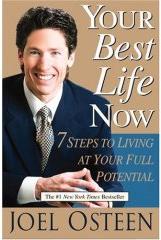
Smilin' Joel-O has been a favorite whipping boy of mine since I first heard him 'preach' on TV. I'm sure Joel is a nice guy, and he may even be a Christian... But he cannot be a good pastor - at least not when held against any Biblical standard of 'pastoring'.

Just for comparison, take a gander at this little juxtaposition of the message in Joel-O's first book and John Owen. Which one is more likely to shepherd the readers toward conformation to the image of Christ?

4) Low-balling marriage for the sake of 'mission'
Another Emergent rant... In this case, I'm rambling about how one emergent pastor (Bill Yaccino) decides whom he'll marry at his church. He seems to think that giving 'spiritual people' their traditional church wedding is a way to be "missional". I beg to differ.

This was the 2nd 'big link' in this little blog's history... Of course, two posts after this I ranted against the owner of the 'watch-blog' that linked in. So much for that budding opportunity at fame.

3) "Snoogums the Chihuahua" and Purpose-Driven Pets
Still one of the top-hit generators on this blog, and the first of two pot-shots taken at the Purpose-Driven man himself, Rick Warren.

I love animals... Really! But there's just something wrong with accepting a theology that says Heaven will include our pets since we probably couldn't be happy in eternity without them. I dunno. I just don't remember see that bit surrounding the endless cries re: the triumph of the Lamb. Perhaps it's in the apocrypha?

This was the 1st 'big link' in Dluxe's World history - and it came from no less than the mega-uber-blogger Tim Challies. I suppose when you link someone, quote them, and describe their comments as "eloquent" good things are bound to happen. Thanks, Tim!

2) The Methodist Chronicles (Part 1 and Part 2)

I was born and raised in a small-town United Methodist church. So, it's not surprising that I keep an eye on the developments within the UMC and feel the need to rant about what I see.

First, I went a little coo-coo-for-Coco-Puffs over the Minnesota UMC's decision to "to fully welcome gays and lesbians and to support gay marriage and the ordination of gay clergy." As I mentioned re: Brian McLaren above, I just can't help but see that issue as settled in Scripture. The post did lead to a fun discussion with my favorite Methodist seminarian (and soon-to-be-pastor), Josh Doughty.

Josh reappeared (on request) for the fun in my second UMC rant... This time, my blowing a fuse was caused by the decision of one church/conference to retain a pastor after he and/or she had undergone a sex-change. I didn't really rant much - instead leaving the insightful commentary to the much more piercing Al Mohler.

1) Beware of the concordance!
This isn't really a rant, per se, but it's absolutely my favorite "They did what??!?!" post of all time. Try to figure out what's wrong with this banner ad I spied while surfing the net one day (church name clipped to protect the guilty).


Once you think you've got it, click here to get the answer from the original post.

Ahhhh.... The internet. Never-ending source of amusement.

Labels: , ,

Thursday, March 13

The Limits of ID

As the previous post (well, the comment, actually) shows, I'm feeling 'ranty' today... I was exchanging emails with a good friend regarding teaching people in our church last night. In one message, he mentioned this:
I had a woman [at work] this week tell me that she did not matter and that she only lived to not disappoint her daughter. Her life ended when her husband left her 20 years ago. She said that she loved her husband and expected the same in return. She acknowledged that there was a design to marriage and family and that her husband had violated that design when he left her and now her life had no meaning. I said if there was a design then surely she must acknowledge a designer and that perhaps the designer was the origin of her meaning. Her reply was, "but my parents are dead." This is the kind of depressive thinking I see too often.

There's a lot to say about that. But, I just want to rant on one narrow slice for a moment. I think that Christians are being far too enthusiastic about embracing Intelligent Design as a gadget for evangelism.

I remember Ravi Zacharias mentioning that life has four big questions that we are seeking to answer:
  • Origin (Where did I come from?)
  • Meaning (Why am I here?)
  • Morality (What is right/wrong, or good/evil?)
  • Destiny (Where am I going?)
Using intelligent design as an apologetic platform is fundamentally flawed, in my opinion, because it only seeks to answer the first question. Let's assume that I am sitting down with a skeptic here at my office... Through a winsome presentation of ID theory, there is a breakthrough in their mind and they begin - perhaps for the first time - to see and acknowledge the presence and intervention of a Designer.

If I pick up my cup of coffee and go home now, what have I accomplished? This person is aware of a Designer with no idea of the Designer's identity or how to connect to him/her. I haven't gone far enough in bringing this person towards a revelation of who God is. Now, I understand that not everyone in the ID community picks up their coffee and leaves. Still, the stock mantra of ID doesn't go far enough.

ID is also universalist in nature. If my friend leaves our coffee time believing for the first time in a designer, what happens when the Mormon missionaries show up on his doorstep that evening? The argument for design in isolation is just as effective for them to use as a means of drawing my friend towards a false gospel as it could be towards drawing my friend to the true Gospel.

Two people in our church are doing biology studies here at the college. They informed me that a Muslim scholar, Harun Yahya, had produced a book called the Atlas of Creation and sent copies to nearly all the life sciences professors at major US universities. In the 'About the Author' section of the 1st edition, you read the following:
The Prophet's seal on his books' covers is symbolic and is linked to their contents. It represents the Qur'an (the Final Scripture) and Prophet Muhammad (may God bless him and grant him peace), last of the prophets. Under the guidance of the Qur'an and the Sunnah (teachings of the Prophet [may God bless him and grant him peace]), the author makes it his purpose to disprove each fundamental tenet of irreligious ideologies and to have the "last word," so as to completely silence the objections raised against religion. He uses the seal of the final Prophet (may God bless him and grant him peace), who attained ultimate wisdom and moral perfection, as a sign of his intention to offer the last word.
All of Harun Yahya's works share one single goal: to convey the Qur'an's message, encourage readers to consider basic faith-related issues such as God's existence and unity and the Hereafter; and to expose irreligious systems' feeble foundations and perverted ideologies.

What is to prevent me from following Allah as a result of ID argumentation? I read this book, was convinced, and it pointed me to Allah, right? Maybe the Designer was Allah. Or maybe Vishnu, or maybe even Xenu & L. Ron? Intelligent design points to our Creator, but leaves it up to our sinful minds to identify and seek Him.

The trick is that the Bible says we already know God and willfully suppress the knowledge of Him so we can go on in rebellion. What is to prevent that same sinful impulse from leading me to the altar of 'another god'?

Lastly, I fear that ID might allow us - or even motivate us - to escape from the offense of Christ's work on the cross. Paul says this in 1 Corinthians:
For Christ did not send me to baptize but to preach the gospel, and not with words of eloquent wisdom, lest the cross of Christ be emptied of its power.

For the word of the cross is folly to those who are perishing, but to us who are being saved it is the power of God... Where is the one who is wise? Where is the scribe? Where is the debater of this age? Has not God made foolish the wisdom of the world? For since, in the wisdom of God, the world did not know God through wisdom, it pleased God through the folly of what we preach to save those who believe. For Jews demand signs and Greeks seek wisdom, but we preach Christ crucified, a stumbling block to Jews and folly to Gentiles, but to those who are called, both Jews and Greeks, Christ the power of God and the wisdom of God. For the foolishness of God is wiser than men, and the weakness of God is stronger than men...

For I decided to know nothing among you except Jesus Christ and him crucified. (1 Corinthians 1:17-2:2, ESV)
I can't help but believe that there inside of every true Christian is a nagging voice which reminds us that, without the Gospel, people will perish. They need to hear, and they won't hear unless someone speaks to them (Romans 10). So, we feel that urge to speak but know that what we have to say will be offensive and uncomfortable. As a result, we selfishly look for ways to speak while not offending - to silence the nagging feeling inside without alienating the person in front of us. So, we speak in broad terms of a Creator and design without getting to the hard issues of our sin and need for redemption.

We must preach the Gospel. With only a knowledge of a Creator, people stand condemned in their sins. With only an acknowledgment of design, a hurting world is left to cast about in an attempt to find relationship with their Creator - all the while being driven apart from Him by their sin.

If we want to comfort the hurting and redeem the lost, we must bring the only message that truly can bring lasting change and fulfillment to someone's life.

Let's revisit the woman in our first example... When someone confesses their life has no meaning, can we please be bold enough to take them by the hand and say something like this:

Let me tell you what I believe... I believe that there is a loving God who made everything we see. He crafted the whole world, including every cell in your body, with His hand. But instead of running to Him, the Bible tells us that we have all rebelled against God. We have taken His laws, that He gave for our good, and broken them in our own selfish interests. God is just and pure, so our lawbreaking deserves punishment.

The incredibly good news is that God loves you so much that, rather than punish you for your rebellion, He chose to punish His only Son. So, Jesus was born, lived, died, and rose again so we can be brought back to God. Our sentence has already been served by another.

If you want meaning, find life in the only one who can give you that... Look to the cross where God demonstrates His love for rebels like you and me, believe, and live!


Now, look. I say that as much out of aspiration as anyone. I certainly don't embrace evangelistic moments the way that I should... But my point is that I believe the Holy Spirit is just as capable of converting someone's heart with a 'naked' presentation of the Gospel as He is able to draw them using Intelligent Design arguments. If that's true (and it is), can't we just get to the main thing and trust the details to God?

ID, though awesome and cool, cannot being people to Christ. If we win people to Intelligent Design with no recognition of Jesus, then we haven't won them to anything yet. We must be faithful to answer all the important questions, and the Gospel in itself does that.

It's offensive, but it's true. And God honors to proclamation of the glory of His Son. So, let's speak boldly and rationally. Not the other way around.

Labels: ,

Thursday, December 6

Surprised? Not.

Saw this story over on centuri0n's blog. Is anyone surprised?

Labels:

Tuesday, November 13

when speaking of the 'e.c.' ....

... you must use only lowercase letters and occasional punctuation

Well, I promised some actual content would start appearing on this blog again. And I am at least someone who (tries) to keep my promises (as often as I can). In this case, the topic kinda fell into my lap though it is a rehash of a lot of old stuff.

I posted a set of videos a few days ago in which WOTM radio's Todd Friel interviewed emergent church 'leader' Doug Padgitt. If you haven't watched them, you might want to before reading the rest of this post.

Let me start by saying that I specifically refrained from commenting on the original videos because I wanted them to speak for themselves. I am not a huge WOTM fan and never have been. Moreover, Friel still has too much of the edgy-comedian edge to him to be a great interviewer.

Additionally, it's worth noting that I would affirm, in agreement with the 'emergers', that there have been some pretty significant errors in the traditional church and evangelical mindset that needed correction. The increased emphasis on missional living, cultural engagement/contextualization, removal of artificial legalism, and default patterns for 'doing church' are all things I find myself applauding.

Ok. In the comment thread to the Friel/Padgitt videos, our friend Mary had some things to say. I want to respond to several things she raised here in the main... Mary's comments are in italics.

An odd and rather unfortunate interview... It seems to polarize the two men onto extreme sides without searching for common ground between them. This happens all the time in the political realm and I wish it wouldn't happen in the church so much.

I agree the tone of the interview is not spectacular.... However, I understand the reason it might've been that way.

Some of us are theological neatniks and would hold that there are clearly areas of theological disagreement that no amount of common ground can repair. For many on the outside of the e.c. stream, the perception is that there are fundamental areas of orthodoxy which the e.c. is content to be 'vague' on. At best, that fuzziness is rooted in a desire to engage saint and seeker alike in a process of real, vital discovery rather than simply 'preaching'.

While there is clearly merit to that approach in certain circumstances, there are also times where there is black-and-white truth that needs to be dealt with. The public faces (more on this later) of the e.c. don't seem to draw the lines the same place I do. For example, a lot of tension in the interview could've been diffused had Padgitt simply said something like "Well, there will be a new heavens and a new earth and we will be in the presence of God for eternity." However, he chose to take the postmodern "What's in a word?" route... I can't help but wonder where else the fuzziness comes in...

Like or not, the so-called "emerging church" is here and will have a major effect on American theology for years to come, so it seems that a better approach would have been oriented more towards reconciling and understanding rather than nasty polemics.

Again, agreed assuming that we can find the common ground. If we're talking about methodology and style, ok. But if we're talking about doctrine, there are areas that I think we rightly need to challenge. I think that we fail to recognize how incredibly easy it is for us to pervert the Gospel of grace into something far dif'rent.

Anyway, I think I would like to have heard more from Pagitt about what it means to be "at work in the world." While not fond of the evasive speech that has come to define the e.c. movement, I really think their missional life has a lot to offer and inspire.

I think the emphasis on missional living is a vital and valid corrective that the e.c. community has brought to the fore... It is important to mention here, however, that the emergers hardly have a copyright on this. Find me a person interested in missional living who hasn't found themselves nodding along with Tim Keller, Ed Stetzer, or Newbigin. Yet those three balance an almost-emergent committment to living the Christian life with both a strong ecclesiology and traditional, orthodox doctrine.

The "at work in world" philosophy of ministry and life is a prophetic call to many American Christians to stop hibernating in the cave of evangelical subculture.

YES! Agreed and affirmed.

I just wish that e.c. leaders were more plain-spoken. I think the idea is to be more "user-friendly," but one must be careful not to engage in deception. From experience, I know that many emerging churches are actually still very conservative in doctrine... they just won't admit it outright.

Three things to say here:

1. One of the main challenges the e.c. has with people on the Reformed side of the fence is that the leaders are plenty plain-spoken. If you haven't read McLaren's new book, you should. It's an eye opener and quite plain about the need to "question and reinvent" just about everything traditionally held as orthodoxy or praxy.

A Josh Harris quote always rings in my brain in this discussion: "It is not humble to be uncertain about those things that God has made plain [in the Bible]." Such 'uncertainty' is, at its core, pride-saturated elevation of human intellect and 'logic' above the disclosed word of God. Worse yet, it only takes a couple small compromises before I think we're "preaching a Gospel different to the one [Paul & the apostles] preached".

2. The e.c. is a ridiculously slippery entity... To call McLaren, Padgitt, Tony Jones, and others the 'leaders' of the e.c. is admittedly problematic. "After all," an emerger might say, "We're not a church with a statement of faith like everyone else. We're a conversation."

So, I recognize that the so-called leaders of the e.c. hardly speak for everyone inside the conversation on every issue of doctrine or practice.

But...

3. The problem with Mary's statement is that there is little or no outcry from within emergent streams poo-pooing the more outrageous statements by the proposed 'leaders'. The silence, in this case, is truly deafening.

Obviously, many people may be unaware of McLaren, Padgitt, and others. "If I don't know what they're saying, I can't speak out in for/against them..." However, as Mary noted, the e.c. stream is a force within the evangelical world today. For pastors to not be engaged with the pertinent ideological issues is irresponsible, I think. Mind you, that engagement looks very different for a pastor in Windsor, VT than it does for the guy in NYC.

So, they are actually less an enemy to traditionalists than is currently perceived. Pagitt's soteriology is not really representative of the emerging church movement, but he sure does make a good whipping boy.

I agree that the e.c. as a movement is not an enemy to the cause of Christ. I think the supposed leaders are real problems, however. The ideas being touted by these men/women are impacting an entire generation of new believers and future leaders. That's a big deal. And when McLaren can be completely passive re: the questioning of the doctrine of penal substitution, I get worried. And when no one else in the stream speaks up, I get extra worried.

If Padgitt's view of salvation is not representative of the movement, then where is the outcry? Of all the issues we might want to get loud about, I'd think salvation specifics is one of them.

....

Closing comments... I would call myself a closet-emerger. I love the personal connectedness in how the emergers 'do church'. I think the challenge of how to better handle cultural engagement is long overdue - and I thank the e.c. for spurring the discussion. I listen to some 'emergent type' preachers (Darrin Patrick, Mark Driscoll, Matt Chandler) and like them a lot.

But, I have been concerned from the start regarding he increasing 'epistemological humility' that is continuing to grow in the movement. There are things that we must know and communicate clearly - like the Gospel. If we're not doing that, all the good, God-centered thoughts, works of community outreach, or compelling discussions will save our hearers from sin or make us a true church.

I hope this will continue in the meta....

//rant off.
/// re: The TeamPyro Po-Motivators - I just think they're hilarious! So there.
//// If you're interested in getting some helpful info re: the emerging church, hurry and check out Darrin Patrick's excellent lectures at Covenant Theological seminary (which Steve McCoy is tracking on his blog) . Really helpful on the history and some help with classifications....

Labels: ,

Wednesday, October 10

Ummmm. Uh oh?

While I'm not a Seventh Day Adventist, this can't be a good thing.

Labels:

Thursday, August 23

A Non-WWWednesday post????

These days, it must be something pretty cool to warrant a non-WWWednesday post from me... Yeah, sorry about that. Nonetheless, there are two things you should know about. And I am the man appointed to tell you, it seems.

1) Sovereign Grace Ministries has made me extremely happy by making audio downloads of all their 'lesson material' (conference sessions, workshops, etc) totally free.

This is so cool even the Desiring God guys are throwing out propers. Anyway, go here, download a ton of stuff, and be edified.

2) Ben Stein, dressed as Angus Young, talking about the closing of the American mind?* WHOOO HOO! Come on, February! Click the image for the trailer.

*By the way, if you haven't read Bloom's landmark The Closing of the American Mind, repent and borrow it from your library. I can assure you it will not be checked out. This book completely changed my worldview in 1993 when I read it.

Labels: , , ,

Thursday, May 31

John and/or Jane Wesley?

As I've mentioned before, I was born and raised in the United Methodist Church. I started becoming more and more conservative while the denomination became less and less so. So I left a while ago. I still have a deep personal affections for my old church even though what they believe now is very different from then.

The last time I blogged about the UMC I was miffed at the idea of confirming membership of practicing homosexuals. A friend was nice enough to pop over from his blog and comment, giving us the UMC seminarian's perspective. If I am right, he's still at the Minnesota Annual Conference as this post goes up... Well, he's actually linked me in his sideblog now so we'll see if he reappears to comment on this doozy:
A year ago, the Rev. Ann Gordon received her routine reappointment as minister of a Charles Village Methodist congregation.

Yesterday - after undergoing a sex-change operation and taking on a new symbolic name - the Rev. Drew Phoenix received another one-year contract to head St. John's United Methodist Church.
...
"The gender I was assigned at birth has never matched my own true authentic God-given gender identity, how I know myself," Phoenix said. "Fortunately today God's gift of medical science is enabling me to bring my physical body in alignment with my true gender." (full article here)

Now... As is typical, Al Mohler has already said what I intended to say, only better. And he's said a lot more. So, read his thoughts here. And then offer your comments below.

What say ye?

Labels:

Monday, May 21

Not Worthless

A few days ago, I linked to an Al Mohler post on the moral quandry that science is causing for the pro-abortion folks. Specifically, the article dealt with the fact that there really is no reason that someone shouldn't be able to abort a baby simply on the basis of gender, eye color, or some other trait.

Now today, Mohler has written another absolutely fantastic article called "The Revenge of Conscience". Take a minute and read the full article. Then, let's all try to go out and make difference. Ok?

Labels: ,

Tuesday, May 15

But honey, I wanted a [brunette, blond, redhead]

Al Mohler's post today will make your skin crawl...

"Kirsten Moore, president of the pro-choice Reproductive Health Technologies Project, said that when members of her staff recently discussed whether to recommend that any prenatal tests be banned, they found it impossible to draw a line -- even at sex selection, which almost all found morally repugnant. "We all had our own zones of discomfort but still couldn't quite bring ourselves to say, 'Here's the line, firm and clear' because that is the core of the pro-choice philosophy," she said. "You can never make that decision for someone else.""

Read the whole article here... Funny. People still discuss the horrible evil of a ruler who led a country down the path of eugenics/racial hygiene and the moral imperative we were under to stop him. And yet...

Labels:

Thursday, May 10

5/10/07: Where I am right now...

Well, allow me to apologize [again] for the slow, creeping blog-death around here. I'm sorry I haven't been able to post more regularly. You can feel free to blame my lack of blogging on any of the following:
  • Work sucks. The pace at the office continues to increase... I'm incredibly fortunate that the stress of our looming project deadline doesn't really impact me except while I'm at the office. However, the time at work leaves me pretty drained so I'm not up for much once I get home.
  • I'm way behind in my reading for this term's "classes" and am scrambling to get caught up. I'm still waiting for a way to upload biblical Greek directly into my brain, but it ain't happening.
  • Gannon is playing t-ball for the first time, so I've been attending practices and trying to get him to stop throwing like a girl... I kid, I kid. Er, mostly.
  • For the last week or so, I've been madly prepping for a church meeting this coming weekend. There was some serious reading required, and I have a pea-brain. So, I'd appreciate prayers on that front.
  • On top of that, I got tapped to teach this Sunday in our ABF. So, what bandwidth I thought I saved has been sucked up again.
Lest this post be all gripe and no substance, let me point you to a couple things...
First off, check out the Dartmouth Apologia, a Christian journal being published by some Dartmouth students. VBCers might recognize a familiar name on a contribution or two.

On a biblical note, I came across this in prepping for this weekend's ABF lesson. First, check out a couple verses in Psalm 17:
"Deliver my soul from the wicked by your sword,
from men by your hand, O Lord,
from men of the world whose portion is in this life.
You fill their womb with treasure;
they are satisfied with children,
and they leave their abundance to their infants
.

As for me, I shall behold your face in righteousness;
when I awake, I shall be satisfied with your likeness.
"
(Ps 17:13b-15, ESV)

Interesting that the Psalmist recognizes that the prosperity of the wicked is real and, shockingly to some, comes from God. But now read Spurgeon's great unpacking of the bolded verse above:
“[The wicked enemies] are full of children, and leave the rest of their substance to their babes.” But David envies them not. “Go,” says he, “rich man, in all thy riches - go, proud man, in all thy pride - go, thou happy man, with thine abundance of children; I envy thee not; as for me, my lot is different: I can look on you without desiring to have your possessions.

I can well keep that commandment, ’Thou shalt not covet,’ for in your possessions there is nothing worth my love; I set no value upon your earthly treasures; I envy you not your heaps of glittering dust; for my Redeemer is mine.” The man is above envy, because he thinks that the joy would be no joy to him-that the portion would not suit his disposition. Therefore, he turns his eye heavenward, and says, “As for me I shall behold thy face in righteousness.” Oh! beloved, it is a happy thing to be free from envy.

... A happy thing, indeed!

Labels: , ,

Monday, May 7

Rainin' cats and dogs

Well, let's recount the interesting Christian news events from the last few days...

First, in the raining cats department: The 'pending schism threat level' in the Anglican Communion continues to rise. Over the weekend, Nigerian primate Peter Akinola snarfed up (technical term) several US churches that had already broken away from the Episcopal Church USA. I'd really like to meet this Akinola dude since he seems to have little tolerance for posturing and politicking.

The Anglican Communion has been held together recently with spit and duct tape while everyone waits for the Episcopal Church USA to step back from some of its more liberal actions. I'm not sure anyone with any sense is really expecting that course correction to happen... You know when you go to see fireworks how they fire a couple shells just to test the wind? Consider this missionary bishop appointment the first 'bomb bursting in the air', grab some popcorn, and enjoy the show.

Moving onto the dogs: Frank Beckwith, formerly the head of the Evangelical Theological Society, has left evangelicalism and returned to the Roman Catholic Church. Check out the opening salvo of his statement:
During the last week of March 2007, after much prayer, counsel and consideration, my wife and I decided to seek full communion with the Roman Catholic Church. My wife, a baptized Presbyterian, is going through the process of the Rite of Christian Initiation for Adults (RCIA). This will culminate with her receiving the sacraments of Holy Communion and Confirmation. For me, because I had received the sacraments of Baptism, Communion, and Confirmation all before the age of 14, I need only go to confession, request forgiveness for my sins, ask to be received back into the Church, and receive absolution.
It just seems weird to see someone fairly well respected in the broader Protestant tradition refer to returning to 'the Church' and receiving absolution. I'm assuming that absolution is for the sin of being Protestant? Anyway, read the full statement here.

Cats and dogs...

Labels:

Friday, April 6

Yeah! Something's insane, for sure!

Sorry to delay the Whitefield post, I'll try to get it up later. In the meantime read just these two Scripture passages:
"He was despised and rejected by men; a man of sorrows, and acquainted with grief; and as one from whom men hide their faces he was despised, and we esteemed him not. Surely he has borne our griefs and carried our sorrows; yet we esteemed him stricken, smitten by God, and afflicted. But he was wounded for our transgressions; he was crushed for our iniquities; upon him was the chastisement that brought us peace, and with his stripes we are healed. All we like sheep have gone astray; we have turned every one to his own way; and the Lord has laid on him the iniquity of us all. He was oppressed, and he was afflicted, yet he opened not his mouth; like a lamb that is led to the slaughter, and like a sheep that before its shearers is silent, so he opened not his mouth." (Is 53:3-7, ESV)

"And he rose and went. And there was an Ethiopian, a eunuch, a court official of Candace, queen of the Ethiopians, who was in charge of all her treasure. He had come to Jerusalem to worship and was returning, seated in his chariot, and he was reading the prophet Isaiah. And the Spirit said to Philip, “Go over and join this chariot.” So Philip ran to him and heard him reading Isaiah the prophet and asked, “Do you understand what you are reading?” And he said, “How can I, unless someone guides me?” And he invited Philip to come up and sit with him. Now the passage of the Scripture that he was reading was this: “Like a sheep he was led to the slaughter and like a lamb before its shearer is silent, so he opens not his mouth. In his humiliation justice was denied him. Who can describe his generation? For his life is taken away from the earth.” And the eunuch said to Philip, “About whom, I ask you, does the prophet say this, about himself or about someone else?” Then Philip opened his mouth, and beginning with this Scripture he told him the good news about Jesus." (Ac 8:27-35, ESV)

Ok... So, Philip seems to think Isaiah 53 is casting Jesus as the suffering servant, right? And he's not alone in this opinion. All the Gospel accounts - Matthew, Mark, Luke, and John - apply the description of the suffering servant to Christ.

Now: This suffering servant/Jesus Christ "was wounded for our transgressions; he was crushed for our iniquities; upon him was the chastisement that brought us peace, and with his stripes we are healed." Right? CRYSTAL clear.

How in the world do you get from that clarity, to this garbage??
"In other words, Jesus took the rap and we got forgiven as long as we said we believed in him," says Mr John. "This is repulsive as well as nonsensical. It makes God sound like a psychopath. If a human behaved like this we'd say that they were a monster."

Mr John argues that too many Christians go through their lives failing to realise that God is about "love and truth", not "wrath and punishment". He offers an alternative interpretation, suggesting that Christ was crucified so he could "share in the worst of grief and suffering that life can throw at us". (telegraph.co.uk article here)

Unreal. Al Mohler responds to this insanity here.

I get that there are things people in Christianity people might want to run from... I understand that telling someone that abortion or homosexuality or looking at 'harmless' pornography is wrong might be uncomfortble. I get it. But how in the world do you read the Bible and not get the idea of the substitutionary atonement? I'm not a PhD theologian, but even I can see the atonement is the point of the whole book.

If you choose not to believe it, that's one thing. But to say that it's not biblical is just absurd.

Labels: ,

Tuesday, March 20

Context and the Cross

Near the end of February, the blogs were buzzing about an address Ed Stetzer gave at the SBC's "Baptist Identity" conference. The iMonk and centuri0n decided to have a back and forth discussing Stetzer's address that was particularly interesting.

For me, the issue of contextualization hits close to home. After all, I'm interested in church planting... So, how would I envision 'doing church' in a way that's contextually genuine and yet biblically faithful above all else? As if on cue, I got a copy of Stetzer's Planting New Churches in a Postmodern Age (thank goodness for birthdays and Amazon Wishlists).

So, here are a couple thoughts on the whole missional church/contextualization issue...

I'm completely for recognizing that style of dress, musical forms, room decor, and any number of other details are open for variation based on cultural context. In San Francisco I might wear untucked shirts and Birkenstocks while in Maine I might wear flannel and a down-filled parka. I might play the latest Sovereign Grace songs in a college town but find myself singing Fannie Crosby [ick] as we minister in a retirement community.

Underneath all these cultural contexts needs to be the same, solid, bedrock Gospel truth that was 'delivered once for all to the saints'. To borrow a phrase from Stetzer, we must study the culture of our mission field and learn what questions they are asking to which the Gospel is the answer. We can tell the story different ways (consider the 3 synoptic, but not idential, Gospels) but the ending must be the same.

The real challenge in all this is idolotry... Sounds strange, right? But I'm serious. We elevate ministry style far above simply contextualizing and quickly start setting Scripture aside in favor of our methods. The simple fact is that I don't need to be just like the people I minister to. I do need to understand them and their struggles. As soon as you find myself clinging to my style of dress or music as key to your ministry, I think you better take a step back and reconsider.

Far too many young pastors are looking at the birth of the postmodern church to validate their failure to think through their ministry methodology in light of transforming grace. Perhaps an equal number of older pastors/churches have moved their own preferences to the point of dogma. Still, I think arrogance is characteristic of youth and so we need to be watchful.

The Gospel is key. And the Gospel transforms. If we reach people with the Gospel and they are the same, we better ask ourselves what's wrong. I don't mean that I expect a tribesman in Africa to start wearing a western suit to Sunday meetin'. But I expect their behavior, attitude, practices, and perhaps even elements of their dress to change in response to the work of Christ.

If we look just like the world, the reason is probably because we are just like the world. We need to be in the world enough to connect with people for Christ's glory while at the same time not being worldly. Paul labored with all means he could to save some... But he labored to save, and we must remember that above all.

My half-hour, and then some, is up.

Labels:

Thursday, February 8

Imagine... without John Lennon.


How often do I work to meet someone's felt, physical needs, while neglecting the far weightier matter of their need for Christ?

How often do I sit comfortably in my home or church and not marvel at the blessings I've been given?

How often do I shrink from my faith around the water cooler because I don't want to be disliked?

What about you?

Labels:

Saturday, January 27

Medical Care

1) Get sick... You know that the first words out of your Doctor's mouth will be, "It's just a virus... We'll need to let it work itself out."

2) Call in. They confirm there's some virus going around (there always is) and tell you to check in if it hasn't cleared up in a week. This at least gets a note in your file that you've been having symptoms.

3) Two weeks later, you're still battlin' the bug. So, you break down and call in for an appointment. A $10 co-pay later, you're sitting in one of those little carbon-copy exam rooms. In comes the doctor, who after hearing you describe your ordeal gives you a cursory look-over.

4) And tells you that it's still a virus that must still run its course.

5) Stay sick. Wait 5 more days.

6) Lather, rinse, repeat.

Labels:

Sunday, January 21

Sober Monday, indeed...

The following is taken from this sermon delivered by John Piper on January 26, 2003 (emphasis mine):
When the editors at the Minneapolis StarTribune this past Wednesday celebrated the abortion rights decreed by Roe v. Wade ... they raised the question when "incipient life becomes ‘protectably human,’" and said that no better answer has been given than Justice Harry Blackmun’s when he wrote:
We need not resolve the difficult question of when life begins. When those trained in the respective disciplines of medicine, philosophy, and theology are unable to arrive at any consensus, the judiciary, at this point in the development of man’s knowledge, is not in a position to speculate.

What’s the flaw here? The flaw is that, while claiming to withhold judgment, the judiciary not only speculated but authoritatively decreed on the issue: namely, it is not murder or manslaughter to destroy the unborn. That is not a suspension of judgment. That is a decisive judgment: namely, in the womb there is nothing worth protecting by law. To portray this as a sensitive suspension of judgment about the status of unborn life is false and deceptive.

How do you get from, "We do not know whether this is protectable human life," to "Therefore, we will not protect it"? Wouldn’t the logic just as likely (some would say far more likely) be, "Since we do not know whether this is protectable human life, therefore we will protect it." Why does the judicial uncertainty about the humanity of the unborn lead to unbridled license to destroy it?

... Abortion is one of the darkest works of the human race – it is child sacrifice. And the only way it can survive is for darkness to survive. Wherever the light of truth and love comes, darkness flies away. Therefore it is one of the great callings of the followers of Jesus to let their light shine in both ways: to do good deeds and to expose darkness. The aim is partly negative: reveal the error hidden in the darkness, but mainly positive: to bring people to love the light and be made light in the Lord Jesus.

May we answer that call... For more information, visit informative and stark Abort73.com website.

Labels: , ,

Tuesday, December 5

Thinking Suburban-ly

This past weekend, a conversation with a friend shifted the mental focus of my 'Two Year Plan (R)(c)' away from thinking of urban area church planting to our own backyard. Needless to say, this got me thinking...

While there are tons of writings out there on approaching urban centers as mission fields, there's not as much material on reaching rural or suburban America. Or, perhaps more correctly stated, such material is not nearly as prominent. I did come across this set of articles [Part One, Two, and Three] by Hamo at Backyard Missionary. I thought they might spur some conversation... What are the unique challenges of ministering to people in a suburban context, and how do we rise to meet them?

I think one overarching challenge, that's been discussed here before, is the need for us to have a deeper, more 'native' understanding of the Gospel than was needed in the past. To reach a postmodern, fragmented culture, I think that each of us needs to deepen our understanding (theologically-speaking) of the Gospel. Everyone is a closet philospher nowadays, and we need to be able to respond to the questions of the person we're trying to reach. I don't mean we need to know all the answers, but we need to have a framework for our faith in which we can process questions and find answers.

In addition, I think it's key that we be able to show how the Gospel is relevant to our day-to-day, existential struggle. Not only must we be armed with a more robust rational defense of faith, we have to be able to show how that makes a difference for the better (eternally and now). Our culture is extremely anti-hypocrisy and can smell empty words a mile away. If what we preach really doesn't impact our lives, we'll be tuned out quickly. Likewise, if we can't tell/show people how "the narrative lines of their life will only find resolution" (Keller) in Christ why should they shed the things they know?

Please understand, I'm not trying to imply that God is not mighty to save in spite of any of these obstacles. God's spirit can regenerate someone whether or not my 'presentation' is good. What I am saying is that we should honor our Savior by preaching to His people effectively.

While these challenges are not unique to suburbia, I think that decentralization is. Sense of community in any context seems to be fragmenting in our day, and this seems especially true of suburban communities. We live here, but work, shop, or play elsewhere. There's no convocations or centralizing activities (or at least fewer of them) that work to glue us together. We follow national/state politics, but not town meetings... We go to the town festival, but talk to the same people we've always talked to. Very isolationist.

So, I think Hamo is right in that just being there is the first step and that must be supplemented by seeking a way to forge vital personal relationships...

Ok, this has turned into a rant, for sure... Thoughts anyone?

Labels:

Monday, October 30

Fashion - the window to the heart? [2]

Yesterday, I started to post some thoughts on the issues of 'proper church dress'. The post was motivated by some thoughts Mark Driscoll posted on his blog.

Mark was also nice enough to post some questions which were really thought provoking. I prattled on in response to a couple of these brain-ticklers (not that Mark was really asking me what I thought) last time and thought I'd wrap it up today.

Why should we press for formal dress in church when one of the only passages in the New Testament that speaks about what to wear to church rebukes women for dressing up to the degree that they turned church into a fashion show (1 Timothy 2:9–10)?

This is the first question with which I've really taken issue... Before posting any thoughts, it's worth noting that I can't help but read these questions with a bit of Driscoll's snarky edge on them. Perhaps he's asking these things honestly, but his modus operandi is usually to make a stabbing, sarcastic point in such questions.

If I'm reading that into these questions and it isn't really there, I'm sorry!
  • There is a difference between 'formal' and 'fancy'. As Mark notes, Paul is driving at the dividing line between 'gaudy' and 'modest/respectable', not 'formal' versus 'informal'. A woman can wear a nice dress without having to look like something off of a New York runway. As such, I think it's unfair to stretch this to be a blanket indictment formal attire by the Apostle Paul.
  • Also note that Paul is pointing out that the clothing we wear says or reflects (to outsiders if to no one else) something about what we treasure. In this case, the women are displaying a desire to be exalted for their beauty/wealth/style, rather than honoring God in humility with good works.
  • It's at least possible that these were Godly women who, if asked, would've told you they valued all the right things (and meant it)! Nonetheless, their clothing is out of step with that reality and Paul challenges them to make the exterior match the interior. So, while the heart is the main thing, it isn't the only thing.
I agree that we needn't "press for formal dress". But this passage is actually hitting at something far deeper than that.

Since we are supposed to be hospitable and welcome people to church as missionaries, does it not make sense to dress like "normal" people rather than make normal people dress up like "church" people?

To answer an unqualified 'yes' to this question, you must make three assumptions that I think are dangerous. First, you must assume that "normal" dress in a given cultural context is God-honoring. Second, the implication is that "church" people have just taken a good thing to an unnecessary extreme. And lastly, you're assuming that the clothes you wear have a primary impact on your ability to present the Gospel.

Clearly assumption #1 - that "normal" dress is God-honoring - is probably not a safe one... Again, consider the 'Delicious' girl mentioned in the previous post. Or, better yet, don't.

If we hold out a three-piece suit and denim jumpers with head coverings as the only allowable clothes within a church, I agree we are going to have huge missiological problems. Then again, it should be clear that such a view also has huge Biblical problems to deal with. Outside of such unbelievable extremism, I think that clothing differences are not going to impact your ability to preach the Gospel in the United States.

Why? We live in a culture that, by and large, holds to fairly homogenous ideas of dress across most cultural groups. A suit that a Wall Street banker would wear doesn't look completely foreign to a youth in South Philly. If you go to a mall, there's probably less than 5% of people who will be wearing something that completely 'surprises' you... Everyone else will look fairly normal to you.

I think the bigger challenge is getting past the prejudices that certain looks create... If someone walks into my church dressed differently from the rest of us, will we reach out to that person? Will we go up to them and strike up a friendly conversation? Would we sit next to them in the pew if we arrived after they did?

Our ability to look past the clothing that someone wears is the critical thing. When people walk into our churches, we must be welcoming and Christlike... It strikes me that our dress isn't an issue in prolly 99% of missional contexts. Our poor attitudes, however, pose a problem 100% of the time.

So... What do I think is the right 'dress code' for church? So glad you asked. [Yes, I hear the sounds of mouse buttons clicking off to another link]
  • Clothes are good. We should wear them.
  • Our clothing should be modest and respectable. While both of those terms are very subjective, I think we grown-ups should be able to work out agreeable definitions within any given context (Speedos for guys or bikinis for girls would be overtly immodest, dressing up as Spock in full Federation regalia would be overtly disrespectful*).
  • Within those subjective bounds, allow your prayerful conscience to inform your choices. And then just have at it.
  • The spiritual shepherds of a church (whether you call 'em Pastors or Elders) must work to know the people who are in their care. They are tasked with probing the hearts of their sheep and assessing whether clothes are 'just clothes', break some reasonable expectation of decency or respect, and/or are indicative of an underlying heart issue that needs to be addressed.
At the bottom of all this is the Gospel and it's proclamation. We should be people who are being changed to conform to the image of Christ. Our lives need to be subjected to our Lord and rigorously scrutinized to root out those things that are not glorifying to God. That covers what I think, feel, do, wear, and how I react to people who are different than I am.

No matter what clothes you have on, the key question is whether or not your heart is ruled by Christ as Lord. Let's make sure we keep that as they key concern rather than "skirts versus slacks versus jeans".

Anyway, what do you think?

*Considered 'normal' if you worship here or here.

Labels:

Fashion - the window to the heart? [1]

It seems that Mark Driscoll has sparked another internet firestorm thanks to a recent post re: dressing up for church. Read his post here. While I hardly think that I've got the answers nailed down, I thought I'd post some thoughts and ask my astute readers what they think.

My first thought is, I suspect, an obvious one: The real issue here isn't actually about clothing... Of primary concern should be heart-attitude of a particular person. People with nice houses and cars can be lonely and miserable. Some people who are just barely making ends meet are as happy as Red Sox fans when the Yankees lose. There are people who come to church every Sunday in a coat and tie who are nothing more than whitewashed tombs. On the other hand, the person in casual dress may be anything but 'casual' in approaching their Creator in worship.

So, the heart is the key. Agreed?

Having said that, we need to obviously recognize that our clothes are often more than simply external coverings of our private parts. Very often our choice of garb speaks volumes about our attitude, state of mind, and what is important to us. Our fashion sense can speak to our vanity or modesty, our lusts or restraint, our rebellion or our submission. So, our clothing matters at least insomuch as it expresses the condition of our heart.

Driscoll asks some interesting questions. I'll respond to a couple in this post and then knock the rest off tomorrow...

If people become overly worried about their appearance instead of their heart, are they like the Pharisees that Jesus chastised for only washing the outside of the proverbial cup?

Absolutely... But we must examine the intersection of appearance and heart. And they do intersect! I think our challenge is to discern when fashion matters (because it expresses an inward reality) and when it doesn't.

Not to pick on moody teenagers, but let's pick on them for a while. What churchgoer hasn't seen this? -- A nicely dressed family walks in, following several steps behind comes the teenager dressed all in a tattered, black sweatsuit and shuffling along sullenly. Throughout worship service, he's listening to his iPod, slouched over, and shifting in the pew impatiently. Don't all these things together (behavior, posture, and dress) give you some window into what that person thinks or feels?

Clothing is not a pure manifestation of what's in the heart, and we absolutely need to be careful about stereotyping... But at the same time, sometimes our outward appearance speaks volumes. The girl at the mall with 'Delicious' plastered on her chest or rear-end is likely (though not assured) to have a different moral position on sexuality than the Muslim girl in a burqa.

Is the church building somehow a magical sacred space like the Old Testament Temple? Or is it simply a place where God's people gather that is no more and no less sacred than the homes they live in, now that the Spirit has been released from the Holy of Holies into the whole earth?

The church is a building. We bring the real temples with us every week (1 Corinthians 6). Still, if our bodies are the temples of God then I think that has implications for our appearance as well as our conduct. If we have been redeemed from sin by Christ, I think there may well be ways in which our fashion-sense needs to be transformed by the renewing of our minds.

Take the previous example of two girls at the mall - one with her flesh on display, the other with it hidden. In both cases, a vital relationship with Christ should cause some change. In one case, there should be recognition that our body is for God and a spouse, not for the whole world. So, I think you'd rightly expect to see a move towards modesty and a toning down of the sexual overtones. On the side of the aisle, our burqa wearer should be able to ease up a little and put on a pair of slack or a skirt once in a while because her body is not 'dirty'.

Note how both of these hypothetical women's style issues ultimately lie at the heart. In one case an under-realization of the value/privacy of our bodies while the other side over-realizes the same things.

More on all this tomorrow...

Labels:

Thursday, October 26

Mega Champ Power Battle!!! Osteen vs. Owen

I'm picking slowly through Overcoming Sin and Temptation, a fresh edited collection of the writings of the great Puritan writer, John Owen. In the midst of reading, an email from MLF prompted me to think about Joel Osteen...

What do these two men, Smilin' Joel and Puritan John, have to offer to us as followers of Christ today? Owen died a long time ago, while Osteen is so 'now'. I thought I'd offer a couple quotes, letting the authors speak for themselves, for comparison. Both come from the early, introductory sections of their books and are roughly equal in length.

First, from Osteen's bestseller:
I heard a story about a man on vacation in Hawaii with his wife. He was a good man who had achieved a modest measure of success, but he was coasting along, thinking that he’s already reached his limits in life. One day, a friend was driving the couple around the island, showing them the sights. They stopped to admire a gorgeous house set high on a hill. The property was replete with beautiful palm trees and lush green gardens in a picturesque, peaceful setting with a panoramic view overlooking the ocean.

As the man gazed at the magnificent home, he commented to his wife and friend, "I can’t even imagine living in a place like that."

Right there, something inside him said, Don’t worry. You won’t. You will never live in a great place like that.

Startled at his own thoughts, he asked himself, What do you mean?

As long as you can’t imagine it, as long as you can’t see it, then it is not going to happen for you. The man correctly realized that his own thoughts and attitudes were condemning him to mediocrity. He determined then and there to start believing better of himself, and believing better of God.

It’s the same way with us. We have to conceive it on the inside before we’re ever going to receive it on the outside. If you don’t think you can have something good, then you never will. The barrier is in your mind. It’s not God’s lack of resources or your lack of talent that prevents you from prospering. Your own wrong thinking can keep you from God’s best. (Your Best Life Now, p. 3)

Ok... Thus saith Joel. Compare and contrast his quote with with this one from John Owen:
Sin will not only be striving, acting, rebelling, troubling, disquieting, but if let alone, if not continually mortified, it will bring forth great, cursed, scandalous, soul-destroying sins. The apostle tells us what the works and fruits of it are. "The works of the flesh are manifest, which are, adultery, fornication, uncleanness, lasciviousness, idolatry, witchcraft, hatred, variance, emulations, wrath, strife, seditions, heresies, envyings, murders, drunkenness, revelings, and such like" (Gal. 5:19-21). You know what it did in David and sundry others. Sin aims always at the utmost; every time it rises up to tempt or entice, might it have its own course, it would go out to the utmost sin in that kind. Every unclean thought or glance would be adultery if it could; every covetous desire would be oppression, every thought of unbelief would be atheism, might it grow to its head... [E]very rise of lust, might it have its course, would come to the height of villainy: it is like the grave that is never satisfied. And herein lies no small share of the deceitfulness of sin ... [I]t is modest, as it were, in its first motions and proposals, but having once got footing in the heart by them, it constantly makes good its ground, and presses on to some farther degrees in the same kind.

...

Now nothing can prevent this but mortification; that withers the root and strikes at the head of sin every hour, so that whatever it aims at, it is crossed in. There is not the best saint in the world but, if he should give over this duty, would fall into as many cursed sins as ever any did of his kind. (Overcoming Sin and Temptation, pp.52-53)

Whaddaya think? Now, there are obviously differences in language... But you're all smart people and can process Owen's heavy prose!

I could start a long screed here, offering my strongly-held opinions about both writings. However, I will refrain. Instead, I just want to ask a question:

Which of the competing methodologies (self-help-cheerleader positivism on one hand, getting our hands greasy in the depth of our sinfulness on the other) is more likely to accomplish real, God-honoring change in the life of a believer? Which delivers our best life now and a life that will cross into eternity?

"Sin sets its strength against every act of holiness and against every degree we grow to. Let not that man think he makes any progress in holiness who walks not over the bellies of his lusts. He who does not kill sin in his way takes no steps toward his journey’s end. He who finds not opposition from it, and who sets not himself in every particular to its mortification, is at peace with it, not dying to it." (Overcoming Sin and Temptation, p.55)

Labels: ,